
3. ANalysis of Demand

This section provides the analytical background for the Bicycle Transportation Plan. It reviews the relationship between bicycle use, demographics, and land use in Humboldt County.  It also identifies the general needs of commuter and recreational bicyclists, and reviews the regional activity centers and public facilities where bicyclists may be destined. The purpose of reviewing the needs of recreational and commuter bicyclists is twofold: it is instrumental when planning a system that must serve both user groups and it is useful when attempting to quantify future usage and benefits to justify expenditures of resources.  Finally, this section provides an analysis of bicycle accidents, a summary of opportunities and constraints for the regional system, and a brief overview of the public outreach performed for this update effort.

3.1 Recreational and Commuter Needs Analysis

3.1.1 THE BENEFITS OF BICYCLING

A key goal of the Bicycle Transportation Plan is to maximize the number of bicycle commuters in order to help achieve large transportation goals such as minimizing traffic congestion and air pollution.  In order to set the framework for these benefits, national statistics and policies are used as a basis for determining the benefits to the County. According to the 2000 U.S. Census, 1.6 percent of all employed County residents commute primarily by bicycle (see Table 1). This does not include those who ride less than 50 percent of the time.  Thus, the bicycle commute rate in the Humboldt County is well above average compared to the rate of California (0.8%) and the United States (0.4%) as a whole.

·         Currently, nearly three million adults (about 1 in 60) commute by bicycle. This number could rise to 35 million if adequate facilities were provided (according to a 1991 Lou Harris Poll).

·         The latent “need” for bicycle and pedestrian facilities -versus actual bicyclists and pedestrians- is difficult to quantify; we must rely on evaluation of comparable communities to determine potential usage.

·         Currently, the average household in the U.S. generates about 10 vehicle trips per day. Work trips account for less than 30 percent of these trips on average.

The distances between residences and workplaces combined with the types of employment, climate, and available bicycle facilities all influence the commute mode split.  As Humboldt County grows and develops and additional local employment opportunities become available and better bicycle connections are provided, this mode share can be expected to increase.


Table 1 – 2000 CENSUS JOURNEY TO WORK DATA (%)

Place

Car – (Alone)

Car – Pool

Public Trans.

Bicycle

Walk

Other

Work At Home

Ave. Travel Time (Min.)

Humboldt County

71.6

13.1

1.0

1.7

6.5

2.2

5.6

17.8

INCORPORATED CITIES

Arcata

59.7

10.4

2.4

5.2

17.0

5.8

4.7

15.1

Blue Lake

77.9

13.1

0

2.5

2.7

3.1

3.2

18.6

Eureka

68.1

15.0

1.9

1.7

7.7

1.7

5.5

14.9

Ferndale

68.0

9.6

0

0.3

12.6

1.8

8.1

19.9

Fortuna

76.8

14.4

0.4

1.2

3.6

1.9

3.0

18.3

Rio Dell

70.1

20.7

0

1.5

2.9

3.0

3.3

19.1

Trinidad

66.5

6.7

1.2

0.0

8.5

0

17.1

22.8

UNINCORPORATED COMMUNITIES

Cutten

78.0

16.6

0

0.6

2.7

0.6

2.1

14.1

Humboldt Hill

75.8

15.1

0.9

1.7

0.6

2.3

5.3

17.0

Hydesville

80.6

14.2

0

0.0

0.4

0.4

4.4

22.3

McKinleyville

77.0

13.8

0.8

1.1

1.4

1.6

5.3

19.0

Myrtletown

81.2

12.7

0

1.3

1.8

1.7

2.7

12.7

Pine Hills

81.3

13.3

1.7

0.4

1.0

0.4

2.2

18.1

Redway – Garberville

57.1

10.8

0

0.0

16.5

0

15.7

19.9

Westhaven-Moonstone

71.8

19.3

0

0.7

0

0.7

8.1

23.3

Willow Creek

72.8

13.8

0

0.0

4.6

1.8

7.0

20.6

AMERICAN INDIAN RESERVATIONS

Blue Lake Rancheria

87.2

7.7

0

0.0

5.1

0

0

26.7

Hoopa Valley

73.1

18.2

0

0.5

3.1

1.6

4.1

14.6

Table Bluff Reservation

73.7

15.8

0

0.0

0

0

10.5

22.4

Yurok Reservation

55.2

24.6

1.6

0.0

5.0

3.2

10.4

31.3


3.1.2 LAND USE AND DEMAND

The concept of “demand” for bicycle facilities is difficult to comprehend.  Unlike automobile use, where historical trip generation studies for different types of land uses permits an estimate of future “demand” for travel, no such methodology exists for bicycles.

Consider this: do people who already ride bicycles have any “demand” for additional facilities? Is it possible to measure the “demand” for recreational facilities any more than, say, the demand for a park or library?  While the concept is soft, the need to quantify and understand the need for various types of bicycle facilities is critical.  Without it, there can be no good long-range planning and no good argument to invest public dollars in improvements.

One of the first steps in evaluating demand is to review population and land use in the county. Humboldt County has a 2003 population of 127,915 according to Census estimates and is growing slightly every year.  The population is expected to reach 143,100 by 2025.

Humboldt County’s General Plan is currently being updated. The “Building Communities” discussion paper (February 2002) developed as background material for the update determined existing land uses in the county. Incorporated cities only account for one percent of the total 3,570 square miles in Humboldt County. The remaining land uses are shown in Table 2. A majority of the entire county is devoted to agriculture and timberland uses (60.2%). Another use that is dominant in the county is open spaces and parks which account for 25.7 percent of the unincorporated land use.

Table 2 – UNINCORPORATED HUMBOLDT COUNTY LAND USE

LAND USE

% OF TOTAL

Rural Residential

5.0%

Single-Family Residential

0.2%

Multi-Family Residential

0.0%

Commercial

0.1%

Light Industry

0.001%

Heavy Industry

0.1%

Public and Semi-Public

0.5%

Open Space/Parks

25.7%

Agriculture and Grazing

15.2%

Timber Production

45.0%

Tribal Lands

4.1%

Vacant Lands (urban)

0.2%

Vacant/Unclassified

3.88%

Future growth and changes in land use are important to bikeway planning for two reasons.  First, new developments will require new and upgraded roadways which will provide bike lanes as part of the standards recommended in this report.  Much of the cost of the proposed system, therefore, will be borne as part of the cost of developing new roadways.

Second, changes in land use (and particularly employment areas) impact average commute distance, which in turn affects the attractiveness of bicycling as a commute mode. Currently, the average one-way commute time in Humboldt County is 17.8 minutes.

Demographics are linked to bicycling in several ways. Of all demographic features, average age is most directly linked to potential bicycle riding.  A survey conducted by the Bureau of Transportation Statistics and the National Traffic Safety Administration in 2002 found a steep decline in bicycle ridership as people age. Of the respondents aged 16-24, nearly 40% rode bicycles, in the 45-54 age group, only 26% rod bicycles. Only 9% of those surveyed over the age of 65 rode bicycles.  It may be argued that older people do not ride as often because of concerns about safety, and this is a valid consideration. Humboldt County’s average age (36.3 years) is slightly higher than the national norm of 35.3 years. 

Using a formula developed by the U.S. DOT and the Trail & Bikeway Center, potential mode split for commuting purposes in Humboldt County by the year 2010 is four percent, compared to an existing mode split of about 1.6 percent.  This represents a significant reduction in VMT (vehicle miles traveled), congestion, roadway construction, and air pollutants, and is an important argument supporting increased investment in bicycle facilities in the future.

3.1.3 Regional Activity Centers and Public Facilities

The proposed regional bikeway network will connect the neighborhoods where people live to the places they work, shop, recreate, and/or go to school.  It also seeks to provide loop routes for those who have no specific destination, but ride for exercise or enjoyment.  Loop routes are important as they provide for safe recreational riding by limiting turning movements thereby avoiding conflicts with automobiles and other traffic.  Major regional activity centers in Humboldt County include:


·         Downtowns

·         Commercial Districts

·         Civic Buildings and Libraries

·         Major Employment Centers

·         Regional Shopping Centers


·         HSU and College of the Redwoods

·         Transit

·         Residential Neighborhoods

·         Hospitals

·         Schools


Land uses and activity centers are identified on the bikeway maps in the following sections.

3.1.4 COMMUTER NEEDS

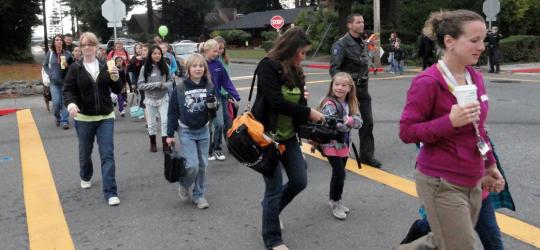
Commuter bicyclists range from employees who ride occasionally to work to a child who rides to school.  Millions of dollars have been spent attempting to increase the number of people who ride to work or school, with moderate success.  Bicycling requires shorter commutes, which runs counter to our historical land use and transportation policies which encouraged people to live further and further from where they work. Access to transit helps extend the commute range of cyclists, but transit systems also face an increasingly dispersed live-work pattern that is difficult to serve. Despite these facts, Humboldt County has a great potential to increase the number of people who ride to work or school.

Bicycle commuters in the City of Davis have reduced peak hour traffic volumes by over 15 percent - to the point that many downtown streets that would normally be four lanes of traffic (with no bike lanes) have only two traffic lanes and ample room for bicyclists.  While Davis may be an anomaly, national surveys have shown that about 20 percent of the adult population would use a bicycle to ride to work at least occasionally if there were a properly designed bikeway system.

Key commuter needs are summarized below.

·         Commuter trips range from several blocks to one or more miles.

·         Commuters typically seek the most direct and fastest route available, with regular adult commuters often preferring to ride on arterials rather than side streets.

·         Commute periods typically coincide with peak traffic volumes and congestion, increasing a bicyclist’s exposure to potential conflicts with vehicles.

·         Places to safely store bicycles are of paramount importance to all bicycle commuters.

·         Major commuter concerns include changes in weather (rain), riding in darkness, personal safety, and security.

·         Rather than be directed to side streets, most commuting cyclists would prefer to be given bike lanes or wider curb lanes on direct routes.

·         Unprotected intersections in general are the primary concerns of all bicycle commuters.

·         Many younger students use sidewalks for riding to schools or parks, which is acceptable in areas where pedestrian volumes are low and driveway visibility is high. Where on-street parking and/or landscaping obscures visibility, sidewalk riders may be exposed to a higher incidence of accidents. Older students who consistently ride at speeds over 10 mph should be directed to riding on-street wherever possible.

·         Students riding the wrong way on streets are common and typically account for many recorded accidents, pointing to the need for effective bicycle education programs.

Commuters and students follow similar paths, which is typically the most direct possible route from origin to destination. For grammar school students, this may consist of residential or collector streets, with few crossings of major arterials. For junior high and high school students, riders may have to cross up to five or six arterials to reach school. For college students and adult commuters, rides are most often less than five miles but may be as long as 10 or 15 miles.

Unfortunately, commuters and students need to travel during periods of peak traffic activity and to destinations that may have high levels of congestion and traffic volumes/speeds.  For example, one of the most dangerous parts of a young student’s commute is the drop-off zone in front of their school where dozens of vehicles jockey for position.

Once they have arrived at their destinations, bicycle commuters often find no (or poor) bicycle racks, and no showers or lockers.  Rather than providing an incentive for bicyclists, most schools and employers inadvertently discourage bicyclists while continuing to subsidize parking for the automobile.

Commuting bicyclists have very obvious and straightforward needs.  They require bike lanes or wider curb lanes along all arterials and collectors, loop detectors at signalized intersections, new signals where school children need to cross busy arterials, adequate pavement maintenance, and adequate bicycle storage and showers at their destinations.

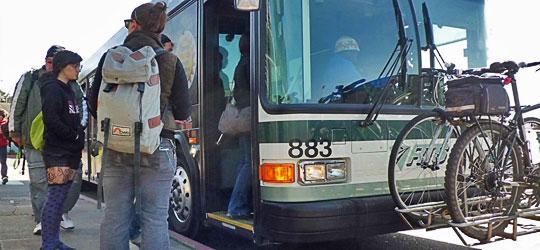
Most commute bicycle trips are under five miles (eight kilometers) and therefore not regional trips, except for those commuters linking to another mode such as at a transit stop or park and ride lot. Allowing bicycles on other modes such as rail or bus, or providing bicycle lockers at multi-modal stations will help extend the range of the bicycle commuter. Other bicycle commuters will depend on a well-devised local bikeway network produced by a city in its bikeway master plan.

3.1.5 RECREATIONAL NEEDS

The needs of recreational bicyclists must be understood prior to developing a system or set of improvements.  While it is not possible to serve every neighborhood and every need, a good plan will integrate recreational needs to the extent possible.  The following points summarize recreational needs:

Recreational bicycling typically falls into two categories: exercise/recreation, and touring.

·         Recreational users range from healthy adults mountain biking to children to senior citizens. Each group has their own abilities, interests, and needs.

·         Directness of route is typically less important than routes with less traffic conflicts, visual interest, shade, protection from wind, moderate gradients, or other features.

·         People exercising or touring often (though not always) prefer a loop route rather than having to backtrack.

·         Mountain bikers, a fast growing segment of recreational users, prefer off-road trails.  The development of long distance trails between cities would go a long way to satisfy their off-street needs. 

·         Self-contained touring, an emerging form of eco-tourism, is popular on the Pacific Coast Bike Route and is increasing statewide. Campsites and rest stops are important amenities for touring cyclists.

Humboldt County offers several excellent recreational bicycle routes for different types of bicycle riders.  These include bike paths for the less experienced rider such as the Hammond Trail, and scenic back roads for longer distance riders such as Westhaven Drive and Scenic Drive in the Trinidad area.

Some of the most obvious deficiencies are the lack of public awareness of bicycling opportunities and poor connectivity to regional recreation destinations and facilities such as parks and rest stops.  Many roads outside developed areas lack shoulders or sufficient width for bicyclists, inhibiting some of the less adventuresome riders.  Finally, there is demonstrated demand for additional bike paths where families, children, and others can ride closer to home without having to worry about traffic.

Two known issues on multi-use trails are roadway/pathway interfaces and conflicts between bicyclists, pedestrians, in-line skaters, and others. As a multi-use trail begins to exceed 200 people per hour, those conflicts become more of a problem unless the trail has adequate width (at least 10 feet), unpaved shoulders for walkers, and adequate signing and enforcement. Regardless of the design and operation, many experienced riders choose not to use multi-use trails because of the unpredictability of other users.  Accident studies have shown that most bicycle-related accidents involve other bicyclists or pedestrians rather than automobiles.  As such, multi-use trails should be designed to separate users as much as possible and the system should not depend on multi-use trails for critical connections to serve all riders.

Studies have shown that recreational opportunities have tangible beneficial impacts on the communities in which they are located, including increased property values, a boost to tourism, expanded local recreation expenditures and destinations, and new business opportunities, as well as more transportation choices. Although recreation is a major part of the lifestyle in Humboldt County and an attraction for tourists, recreational trails are not a major component of this plan. Funding is usually reserved for trails that serve a transportation function, rather than recreational, and this Plan was developed with access to funding in mind.

3.1.6 Accident and Safety Analysis

The California Highway Patrol (CHP) maintains a database of collision records in its Statewide Integrated Traffic Records System (SWITRS). Collision information, including bicycle crashes, is recorded by local police and the CHP and compiled into an annual statewide report.

Statistics and site-specific details on bicycle collisions in Humboldt County provide poignant information about problem locations and the risks bicyclists face. In the years of 1998-2003, there were 439 collisions involving bicyclists, including three fatalities, as shown in Table 3. Not surprisingly, the majority of collisions occurred in the population centers of Eureka and Arcata where large numbers of people bicycle.


Table 3 – BICYCLE COLLISIONS, 1998-2003

Jurisdiction

Property Damage

Injury

Fatality

Total

Arcata

20

84

0

104

Eureka

38

151

1

190

Ferndale

0

0

0

0

Fortuna

6

25

0

31

Rio Dell

2

7

0

9

Trinidad

0

0

0

0

Unincorporated County

9

94

2

105

Humboldt County

75

361

3

439


The SWITRS database also includes the cause of collisions. The top two causes of bicycle collisions in Humboldt County in the years 1998 to 2003 were automobile right-of-way violations and bicyclists traveling on the wrong side of the road. A summary of the causes for collisions are listed in Table 4.

Table 4 – Cause

Cause

Property Damage

Injury

Fatality

Total

Right-of-way – automobile

11

61

1

73

Wrong side

12

60

1

73

Improper turn

12

39

1

52

Other hazard

9

42

0

51

Stop sign/signal

14

36

0

50

Unsafe speed

2

40

0

42

Other improper driver

1

19

0

20

Unknown

5

15

0

20

Driver alcohol/drugs

6

18

0

14

Not driver

0

14

0

14

Lights

1

4

0

5

Improper passing

1

3

0

4

Lane change

1

3

0

4

Starting/backing

0

3

0

3

Not stated

0

2

0

2

Other equipment

0

1

0

1

Pedestrian violation

0

1

0

1

3.2 Summary of Constraints and Opportunity Areas

3.2.1 Constraints

There are numerous existing constraints that impact bicycling and bicycle planning activities in Humboldt County.  Existing impediments to bicycling have been described in detail through the public input process and are listed in the following section.  General constraints for bicyclists and bicycle planning are listed below:

·         Limited local funds for bicycle facilities

·         Limited dedicated bicycle facilities